



Choosing the right bathroom tile ideas can completely transform your space from ordinary to extraordinary. Whether you're planning a full renovation or just looking to refresh key areas, tiles offer endless possibilities to create a bathroom that's both functional and stunning. From sleek floor designs to dramatic feature walls, the right tile choices can make your bathroom feel larger, brighter, and more luxurious.
Modern bathroom design has moved far beyond basic white subway tiles, though those certainly still have their place. Today's homeowners are embracing bold patterns, natural textures, and innovative layouts that reflect their personal style while maintaining practicality. The key is understanding how different tile types, sizes, and installation techniques work together to create a cohesive look that stands the test of time.
In this guide, you'll discover practical strategies for selecting tiles that suit your space, budget, and lifestyle. We'll explore everything from choosing the right materials for different areas to creating stunning visual effects with colour and pattern. Plus, you'll learn insider tips for making your tile installation both beautiful and low maintenance.
What Types of Tiles Work Best in Different Bathroom Areas
Not all tiles are created equal when it comes to bathroom applications. Understanding which types work best in specific areas helps ensure your investment looks great and performs well for years to come.
Which Floor Tiles Offer the Best Performance and Style
Bathroom floors face unique challenges including moisture, temperature changes, and frequent foot traffic. Porcelain tiles top the list for floor applications due to their low water absorption rate and exceptional durability. These tiles resist stains, scratches, and thermal shock, making them perfect for busy family bathrooms.
Natural stone tiles like travertine and slate bring organic beauty but require more maintenance. They need regular sealing to prevent water damage and staining. For those seeking the stone look without the upkeep, stone-look porcelain tiles deliver authentic appearance with superior practicality.
Large format tiles, typically 600mm x 600mm or larger, create a seamless, spacious feel in bathroom floors. Fewer grout lines mean easier cleaning and a more streamlined appearance. However, proper substrate preparation becomes critical with larger tiles to prevent cracking.
How to Choose the Right Wall Tiles for Wet Areas
Wall tiles in shower areas and around baths need excellent water resistance but can be lighter and less robust than floor tiles. Ceramic tiles work beautifully for most wall applications, offering countless design options at budget-friendly prices.
Glass tiles reflect light brilliantly, making small bathrooms appear larger and brighter. Research shows that glass tiles can significantly enhance light reflection in compact spaces, though they can show water spots more readily than other materials. Mosaic glass tiles work particularly well as accent bands or feature areas.
Rectified tiles with minimal grout lines offer a sleek, contemporary appearance while reducing cleaning effort. The precise edges of rectified tiles allow for tighter grout joints, creating clean lines that enhance the overall aesthetic.
How to Create Stunning Feature Walls with Tiles
A well-designed feature wall becomes the focal point of your bathroom, adding personality and visual interest without overwhelming the space. The key lies in choosing the right wall and creating appropriate contrast with surrounding areas.
Where Should You Position Your Tile Feature Wall
The wall behind your vanity or bathtub typically makes the strongest impact as a feature wall. These areas naturally draw the eye and provide substantial surface area for showcasing beautiful tiles. Avoid making the longest wall your feature wall, as this can make the room feel unbalanced.
Consider sight lines from the bathroom entrance when selecting your feature wall. The wall you see first upon entering should create a positive impression and set the tone for the entire space. In ensuite bathrooms, the wall visible from the bedroom also deserves special consideration.
What Patterns and Textures Create Maximum Impact
Textured tiles add depth and sophistication to feature walls, particularly when combined with other design elements. Natural stone textures, 3D geometric patterns, and relief tiles create shadows that change throughout the day as lighting shifts.
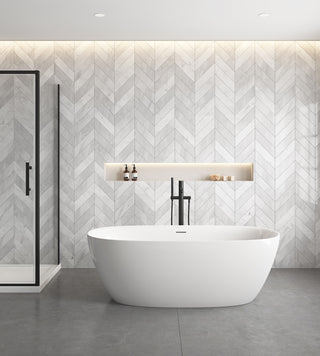
Subway tiles arranged in herringbone or vertical stack patterns offer classic appeal with contemporary flair. Industry guidance confirms that herringbone layouts blend traditional charm with modern elegance. The familiar shape feels timeless, while the unexpected layout adds visual interest. Contrasting grout colours can further enhance these patterns.
Large format tiles with striking veining, such as marble-look porcelain, create dramatic impact with minimal complexity. A single large tile can become artwork when properly lit and positioned.
|
Pattern Type |
Best Use |
Visual Effect |
Maintenance Level
|
|---|---|---|---|
|
Herringbone |
Feature walls, floors |
Dynamic movement |
Medium |
|
Vertical stack |
Small bathrooms |
Heightens ceiling |
Low |
|
Large format |
Modern spaces |
Seamless elegance |
Low |
|
Mosaic |
Accent areas |
Intricate detail |
High |
[collection-carousel="mirrors"]
What Colour Schemes Work Best for Bathroom Tiles
Colour choices significantly impact how spacious, bright, and inviting your bathroom feels. Understanding how different colours interact with light and space helps create the atmosphere you desire.
How Do Neutral Tones Enhance Bathroom Design
Neutral colour palettes create calming, spa-like environments that remain stylish across changing trends. Whites, creams, and soft greys reflect light beautifully, making even small bathrooms feel more spacious and airy.
Warm neutrals like beige and cream add cosiness, while cool greys and whites create crisp, contemporary feels. Mixing warm and cool neutrals within the same space requires careful balance to avoid conflict.
Monochromatic schemes using different shades of the same colour family create sophisticated depth. Varying textures and finishes within the same colour range adds interest without introducing visual chaos.
When Should You Choose Bold or Dark Colours
Dark tiles create dramatic, luxurious atmospheres but require careful planning to avoid overwhelming smaller spaces. Deep blues, charcoal greys, and forest greens work beautifully in larger bathrooms or as accent elements in smaller ones.
Bold colours like emerald green or navy blue make stunning feature walls when balanced with neutral surroundings. These colours work particularly well in powder rooms where the space is used briefly rather than for long periods.
Consider your lighting situation when selecting dark tiles. Natural light helps prevent dark colours from feeling oppressive, while artificial lighting needs to be bright enough to maintain comfortable visibility.
How to Plan Your Tile Layout for Maximum Visual Impact
Strategic tile layout can make rooms appear larger, ceilings higher, and spaces more cohesive. Understanding basic design principles helps you make decisions that enhance your bathroom's proportions and functionality.
What Layout Techniques Make Bathrooms Look Larger
Running tiles diagonally across floors creates the illusion of expanded space by drawing the eye along longer sight lines. Design experts confirm that diagonal layouts effectively make rooms feel larger, particularly in small bathrooms or powder rooms.
Continuing floor tiles partway up the walls creates visual continuity that makes rooms feel more spacious. This approach works especially well with large format tiles that minimise grout line interruption.
Horizontal tile layouts make narrow bathrooms appear wider, while vertical arrangements add height to rooms with low ceilings. Combining these techniques strategically can dramatically improve awkward proportions.
How Do You Mix Different Tile Sizes Effectively
Combining large and small tiles creates visual hierarchy and prevents monotony in larger bathrooms. Use larger tiles for main surfaces and smaller tiles for detail work, borders, or niche areas.
The 60-40 rule provides good guidance when mixing tile sizes. Use your primary tile size for about 60% of the space and accent tiles for the remaining 40%. This creates balance without overwhelming the design.
Transition areas between different tile sizes need careful planning to avoid awkward cuts or misaligned joints. Plan these transitions at natural break points like corners, doorways, or fixture edges.
What Installation Considerations Affect Your Tile Choice
Understanding installation requirements helps you select tiles that suit both your design goals and practical constraints. Some beautiful tile options require specific installation techniques that may impact your budget or timeline.
Which Grout Options Enhance Different Tile Styles
Grout colour dramatically affects the final appearance of your tile installation. Matching grout to tile colour creates seamless, unified surfaces, while contrasting grout emphasises individual tiles and patterns.
Grey grout offers excellent versatility, working well with most tile colours while hiding dirt better than white grout. This choice reduces maintenance while maintaining a clean, contemporary appearance.
Epoxy grout provides superior stain resistance and durability compared to traditional cement-based grouts. While more expensive initially, epoxy grout maintains its appearance longer and resists mould and mildew growth.
How Does Substrate Preparation Impact Tile Performance
Proper substrate preparation prevents many common tile problems including cracking, lifting, and water damage. Waterproofing membranes are essential in wet areas, regardless of tile type.
Large format tiles require extremely flat substrates to prevent lippage and cracking. Industry standards from the Ceramic Tile Foundation emphasise that substrate flatness becomes critical with larger tiles, as even minor substrate irregularities become magnified, potentially requiring additional preparation work.
Natural stone tiles often need specialised installation techniques including back-buttering and appropriate adhesive selection. These materials may also require sealing before, during, and after installation.
What Maintenance Requirements Should Influence Your Tile Selection
Understanding long-term maintenance needs helps you choose tiles that fit your lifestyle and cleaning preferences. Some stunning options require ongoing care that may not suit busy households.
How Do Different Materials Compare for Cleaning and Upkeep
Porcelain tiles offer the easiest maintenance with their non-porous surface resisting stains, bacteria, and moisture penetration. Regular sweeping and mopping with mild cleaners keeps porcelain tiles looking new for years.
Natural stone requires more attention including regular sealing, pH-neutral cleaners, and immediate spill cleanup. However, many homeowners find the extra effort worthwhile for stone's unique beauty and character.
Textured tiles create visual interest but can trap dirt and soap residue in their surface variations. These tiles may require more frequent cleaning and occasional deep cleaning with appropriate brushes.
Minimal grout lines reduce cleaning effort significantly. Large format tiles with tight grout joints require less scrubbing and maintain their appearance with basic maintenance routines.
|
Material Type |
Cleaning Frequency |
Special Requirements |
Durability Rating
|
|---|---|---|---|
|
Porcelain |
Weekly |
Standard cleaners |
Excellent |
|
Natural stone |
Bi-weekly |
Sealing, pH-neutral products |
Good with care |
|
Ceramic |
Weekly |
Avoid abrasive cleaners |
Good |
|
Glass mosaic |
Bi-weekly |
Prevent soap buildup |
Excellent |
How to Budget Effectively for Your Bathroom Tile Project
Tile costs vary dramatically based on material, size, and complexity. Understanding the full scope of expenses helps you allocate your budget wisely and avoid unpleasant surprises.
What Factors Influence Total Project Costs
Material costs typically represent 30-40% of total project expenses, with labour and preparation making up the remainder. Complex layouts, substrate preparation, and waterproofing requirements can significantly increase labour costs.
Large format tiles often cost more per square metre but may reduce installation time and grout maintenance. Consider total cost of ownership including long-term maintenance when evaluating options.
Custom cutting, pattern layouts, and multiple tile types increase labour complexity and costs. Simple, straightforward installations provide better value for budget-conscious renovations.
How Can You Maximise Value in Your Tile Selection
Investing in quality tiles for high-impact areas like feature walls provides maximum visual return. Use simpler, more affordable tiles in less visible areas to balance your budget.
Stock tiles from major manufacturers often provide excellent quality at lower prices than specialty imports. Many stock options rival custom tiles in appearance while offering better availability and pricing.
Consider purchasing 10-15% extra tiles for future repairs and maintenance. Having matching tiles available prevents costly replacement challenges years later when original products may be discontinued.
What the Research Says About Tile Performance
Understanding the evidence behind tile performance claims helps you make informed decisions for your bathroom renovation.
-
Porcelain tiles consistently outperform other materials for water resistance, with absorption rates of 0.5% or less making them ideal for wet areas
-
Large format tiles (600mm+ on at least one edge) reliably create more seamless appearances and reduce grout maintenance in most installations
-
Glass tiles demonstrably enhance light reflection, though the evidence is still emerging on exactly how much brightness increase homeowners can expect in different room sizes
-
Neutral colour schemes have proven track records for creating calming environments, while experts have different views on which specific neutral tones work best for different lighting conditions
-
Diagonal tile layouts effectively create space illusions, though not all studies agree on the optimal angle or tile size for maximum impact
What to Do Next for Your Bathroom Tile Project
Ready to transform your bathroom with beautiful tiles? Start by measuring your space accurately and creating a wishlist of must-have features versus nice-to-have elements. This foundation helps you make decisions that align with both your vision and budget.
Visit showrooms to see tiles in person, as colours and textures can appear quite different under various lighting conditions. Bring paint samples or photos of existing fixtures to ensure your tile selections work harmoniously with other bathroom elements.
For comprehensive bathroom renovation projects, consider how tiles coordinate with other essential elements. Quality mirrors can amplify the impact of beautiful tile work by reflecting light and creating visual depth throughout your space.
[collection-carousel="accessories"]
Get quotes from multiple installers and factor in all costs including substrate preparation, waterproofing, and finishing work. Professional installation ensures your beautiful tiles perform well and look stunning for years to come.
Remember that bathroom renovation is an investment in your home's value and your daily comfort. Taking time to plan thoughtfully and select quality materials pays dividends in both satisfaction and long-term performance.
Key Takeaways for Successful Bathroom Tile Selection
Successful bathroom tile projects balance aesthetic goals with practical requirements. Choose materials that suit your lifestyle, maintenance preferences, and budget while creating the atmosphere you desire.
Consider your bathroom's specific challenges including moisture levels, natural light, and space constraints when selecting tiles. What works beautifully in a large, well-lit master bathroom may not suit a small powder room with limited ventilation.
Plan for the long term by selecting timeless designs that you'll love for years to come. While trends can inspire accent elements, your main tile selections should reflect your personal style rather than fleeting fashions.
Professional installation and quality preparation work are just as important as beautiful tiles. Proper waterproofing, substrate preparation, and installation techniques ensure your investment performs well and maintains its beauty over time.